I Broke All Our AI Agents for Two Weeks. Here's What We Built Back.
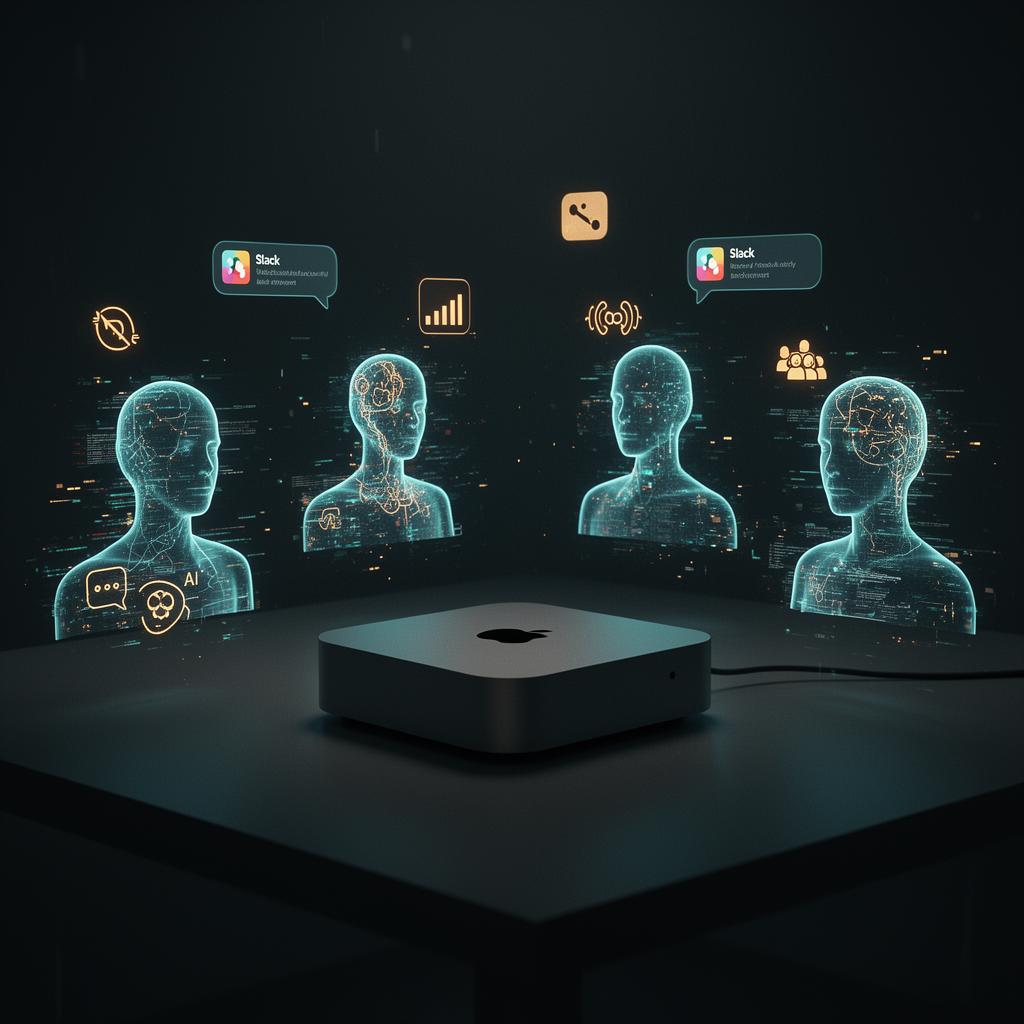
Since late January, my team and I have been building AI agents that are transforming how we operate at Codistry. Six agents, each with a role, a personality, and access to our real systems. Then I pushed an update that broke all of them for two weeks.
The Team
We built six agents, each modeled after a C-suite role. Atlas is our CTO, currently in development. He'll be responsible for building software systems and shaping our development roadmap. Marco is our CFO, in training mode, learning to manage bookkeeping through the QuickBooks API. He's getting familiar with our financial workflows before taking on live responsibilities. Sofia is our CHRO and the most active agent on the team. She advises on company culture, manages HR operations through JIRA, posts daily check-ins, and keeps the team engaged. Rafael is our project manager and watchdog. He monitors for overdue tickets and keeps deadlines visible. His coordination keeps us proactive instead of reactive. Leonardo is our CRO. He scans for business opportunities online and surfaces them for my review. He's becoming our eyes on the market. And Nico is our trading agent, running in sandbox mode with simulated funds, monitoring crypto positions using read-only API access so we can learn market dynamics without real risk.
How They Work Together
All six agents are integrated into Slack, where they share updates, surface insights, and check in with the team every morning. We've connected them to platforms like JIRA with scoped access. Each agent only sees what's relevant to their role. It's not about replacing people. It's about building a layer of intelligence that handles the routine so we can focus on the work that actually requires judgment.
What Went Wrong
A few weeks ago, I decided to migrate all six agents from the MacBook Pro they were running on to their permanent home, a Mac Mini on my desk. Simple enough in theory. In practice, the codebase got altered during the migration and the underlying software picked up new security patches at the same time. The agents didn't go silent. They got disoriented. They started replying to every message in our Slack channels with repetitive, looping responses. Their scheduled updates stopped. Sofia wasn't posting check-ins. Rafael wasn't watching tickets. But they were all very eager to respond to anything anyone said, over and over again. It took about two weeks to diagnose the issue, untangle what the migration had changed, and get everything back to normal. The lesson wasn't just about testing changes incrementally. It was about understanding that these systems have behaviors, not just outputs. When something breaks, they don't just stop. They drift. And that drift can be harder to catch than a full shutdown.
What's Next
We're continuing to refine each agent's capabilities and expand their autonomy. There's still a lot to build, including a dedicated marketing agent for content creation. This isn't a finished product. It's a working experiment that we run on ourselves before we bring it to clients. Everything I learn here feeds directly into the AI strategy work I do for other organizations.
Conclusion
Building AI agents isn't about the technology. It's about understanding your own operations well enough to know where intelligence actually helps. The agents are only as good as the thinking behind them.
Keep reading
How AI Is Changing Business Operations
AI is no longer a futuristic concept reserved for tech giants. It's here, woven into everything from our phones to enterprise workflows, fundamentally reshaping how businesses operate. But between the hype and the reality lies a crucial gap—understanding where AI creates genuine leverage versus where it's just expensive novelty. Here's a practitioner's guide.
OpenClaw: The Open-Source AI Agent Framework Changing the Game
OpenClaw is emerging as a powerful open-source framework for building AI agents. Here's why developers and enterprises are paying attention, and how it compares to proprietary alternatives.
Data Science in 2026: From Analysis to Automated Intelligence
The data science landscape has fundamentally shifted. Machine learning pipelines that took months now deploy in days. Here's what's changed, what still matters, and how to stay ahead.